
Challenging our current understanding of microplastic pollution
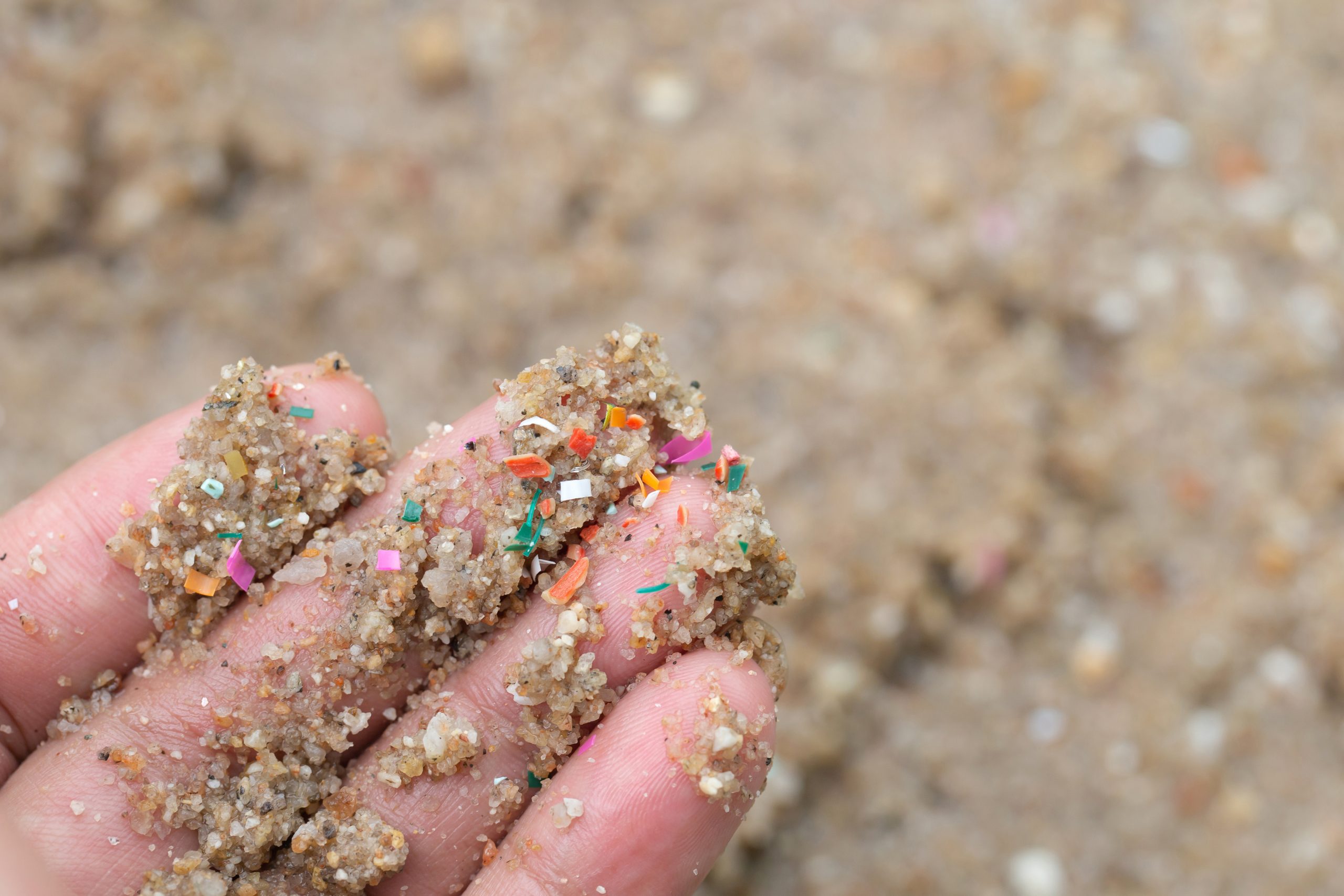
Plastic pollution has been on the environmental agenda for decades. Initially, attention centred on visible plastic waste and the impact it has on oceans and waterways.
But today, researchers are paying closer attention to the distinction between microplastics and nanoplastics while uncovering evidence that these particles extend beyond marine environments into soils, agriculture and even the human body.
In this insight, we will examine how scientific progress could influence future regulation, certification and customer expectations around nano- and microplastics, and what you can do now to prepare for the future.
The difference between microplastics and nanoplastics
A common misconception when discussing this type of plastic pollution is that we are only considering microplastics. Synthetic polymer particles classified as microplastics are less than 5 mm long (NOAA National Ocean Service, 2024) and although they are physically tiny, microplastics occupy a large part of the conversation.
Nanoplastics, in contrast, receive considerably less attention and are often incorrectly conflated with microplastics. Nanoplastics are in fact less than 1 micrometre in length, making them even smaller than most types of bacteria. Due to their microscopic size, nanoplastics can penetrate tissues and even cells, prompting increased scientific interest in how they behave and any implications this may have for human health and the environment.
When international brands and supply chains begin to claim that their products are “microplastic-free”, it is worth taking a closer look to ensure that this catch-all statement is not inadvertently excluding nanoplastics from consideration.
Where are nano and microplastics being found?
Given the widespread association between microplastics and marine environments, it would be easy to assume this type of plastic pollution is purely a water-based phenomenon. For years, charities, organisations and international brands have spoken about the importance of cleaning up our oceans to prevent irresponsibly discarded plastic from harming the marine environment.
However, the discovery of nano- and microplastics covers a much wider area than was first believed. A recent review of field-based studies found that agricultural land often becomes contaminated with microplastics via various sources, such as plastic mulching, greenhouse films and fertilisers as well as sewage sludge and irrigation wastewater (Roy et al., 2025). But it doesn’t stop there.
Just last month, a European study investigated the presence of nano- and microplastics in the human bloodstream and their potential association with cardiovascular disease (Paolisso, et al., 2026). Though the findings of this study and several others are being debated and the scientific community still has not come to a consensus on the tangible harm nano- and microplastics can cause, it is clear that this type of plastic pollution is no longer just a waterway issue.
Planning beyond today’s requirements
Though the regulation of nano- and microplastics is still in its infancy, it’s worth noting that scientific understanding of these particles is developing rapidly, with new studies emerging across the globe.
As the evidence begins to stack up, it’s entirely possible that regulatory action will follow, as we have seen in recent years with the widespread bans on PFAS. For those looking to trade in the EU, the precautionary principle utilised there may speed things up even more, as legislation may be introduced when there is a real possibility that certain substances may pose a danger to public health (European Commission, 2000).
So, what can businesses do today to safeguard their environmental claims?
Pursuing a flustix certification can be an excellent place to start, given the scheme’s commitment to significantly reducing plastic use in products and packaging. As the conversation around plastic pollution continues to expand beyond today’s definitions and traditional environmental contexts, the criteria for achieving a flustix seal are continually reviewed to keep pace with emerging evidence and evolving regulatory frameworks.
As scientific understanding advances and certification schemes and regulatory expectations continue to change, taking a proactive approach to testing and certification today can help you support credible environmental claims and place your business in a stronger position to respond to future compliance requirements.
The value of nano and microplastic testing
Testing for nano- and microplastics via an independent laboratory gives you a clear understanding of how your products and packaging measure up, providing valuable insight into their composition and helping you prepare for flustix certification.
Here at Control Union, our laboratory combines advanced analytical techniques with specialist expertise to validate material composition and confirm the absence of nano- and microplastics, helping you substantiate your environmental claims with confidence.
So, as more evidence is uncovered, definitions expand and consumer demand for transparency grows, we can help ensure you are adequately prepared to meet changing market and regulatory expectations.
References
European Commission (2000) Communication from the Commission on the precautionary principle. COM(2000) 1 final. Luxembourg: Office for Official Publications of the European Communities. Available at: https://eur-lex.europa.eu/legal-content/EN/TXT/?uri=CELEX:52000DC0001 (Accessed: 4 August 2026).
NOAA National Ocean Service (2024) What are microplastics?. Available at: https://oceanservice.noaa.gov/facts/microplastics.html (Accessed: 31 July 2026).
Paolisso, P., Scisciola, L., Belmonte, M., Scarsini, R., Galli, V., Gallinoro, E., Casenghi, M., Ausiello, D., Vincelli, G., Policastro, P., Redivo, M., Cefalì, F., Fenti, A., Pellegrini, V., Falco, G., Galoppo, S., Berni, A., Armillotta, M., Pizzi, C., Prattichizzo, F., Ceriello, A., Barbieri, M., Ribichini, F., lovino, P., Landrigan, P., Paolisso, G., Marfella, R., Barbato, E. (2026) ‘Micro- and nano-plastics in the coronary circulation and air pollution exposure in ischaemic heart disease presentation’, European Heart Journal, 00, pp. 1-17. doi 10.1093/eurheartj/ehag447. (Accessed: 1 August 2026).
Roy, T. et al. (2025) ‘On-farm practices shape microplastics pathways and risks in agricultural soils: A review based on synthesis of global field data’, Environmental Chemistry and Ecotoxicology, 7, pp. 2700-2714. doi: 10.1016/j-enceco.2025.09.015. (Accessed: 1 August 2026).

How can we help you?
Can we help you with more specific information about our Testing, Inspection and/or Certification Services? Or maybe some advice in your language? Any other questions? Let us know and we will gladly help.