
The growing importance of independent microplastic testing
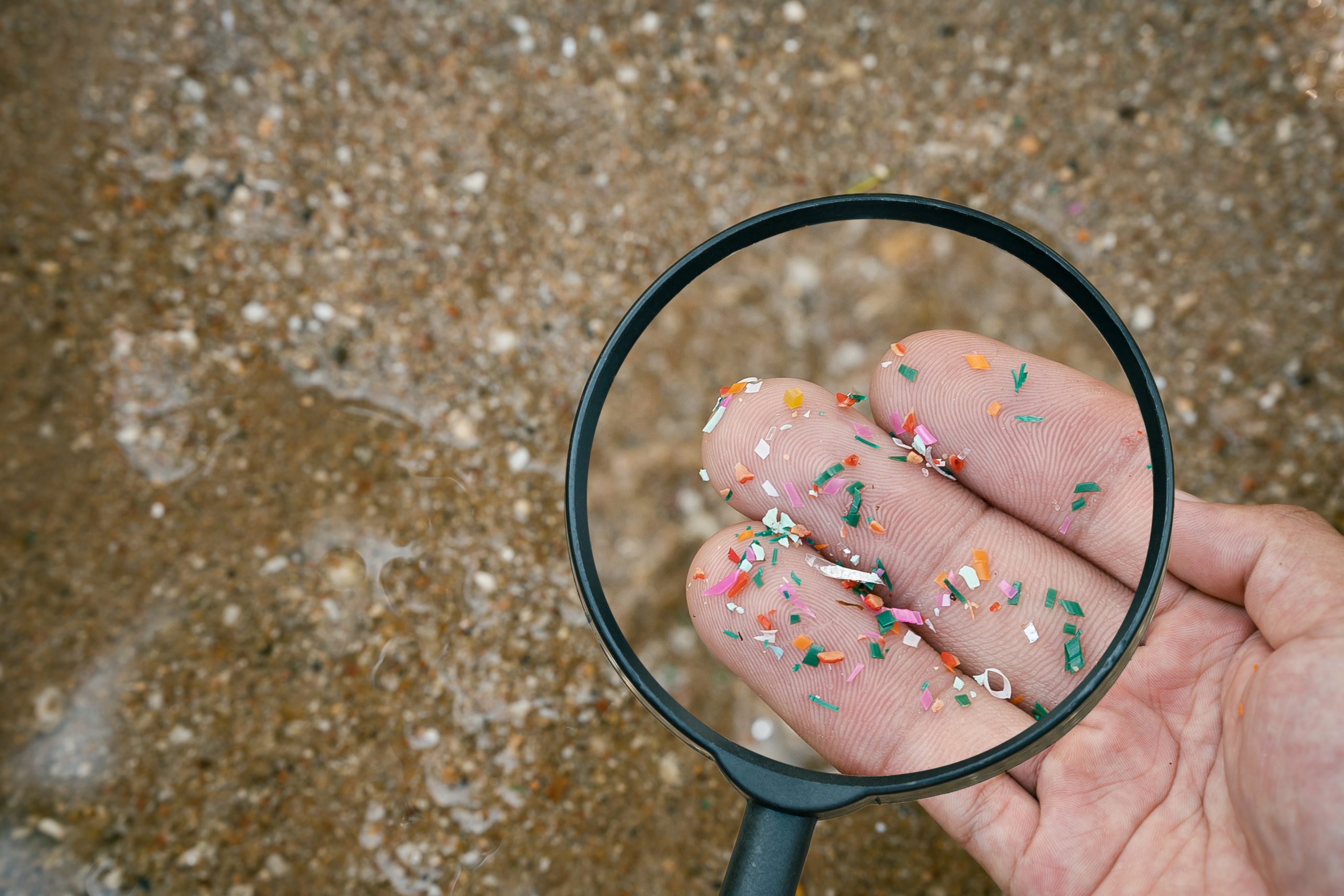
Combating plastic pollution has been on the environmental agenda of many nations for several decades.
On the one hand, since its first patent in the late 19th century, plastic has been viewed as a wonder product that makes many items cheaper, safer, and easier to produce. However, with multiple studies exposing the harmful effects of plastic production, use and disposal, it has become something of a pariah in the eyes of more eco-conscious consumers and stakeholders.
In recent years, the conversation has shifted from visible plastic pollution to microscopic plastic particles. Often discussed collectively as “microplastics”, these particles range in size from the microscopic to the virtually invisible, with even smaller nanoplastics increasingly becoming part of the scientific conversation. Researchers are continuing to investigate not only the particles themselves but also the substances they may carry through the environment and the potential implications for human and environmental health.
In this insight, we explore how changing consumer attitudes, evolving scientific understanding and lessons from PFAS regulation are increasing the importance of independent microplastic testing.
Microplastics and the environmentally conscious stakeholder
Growing awareness of plastic pollution prompted businesses, governments and consumers to rethink their reliance on single-use plastics.
Plastic straws and cutlery were replaced with sustainable alternatives. Many national brands started producing less product packaging. A 2018 review found that 127 countries had adopted some form of plastic-bag legislation, and about 30 had national consumer fees. (1)
Changes were being implemented to help stem the amount of plastic that ended up in landfill. But while this was happening, scientists were making strides in microplastic research. Although many scientists viewed microplastics as an emerging concern, public awareness remained relatively limited. That is until a small study made headline news in 2018 with its claim that microplastics had been found in lab samples of human stool. (2)
Equipped with this new information, even if consumers do not feel well informed about microplastics and their impact (3), the possibility that products could contain microplastics was enough to make many consumers think twice about purchasing them: according to a study form the US, 82% wanted more meaningful private-sector action; 86% supported banning intentionally added microplastics in personal-care products; and 87% favored replacing conventional plastic with compostable or biodegradable materials. (4)
Growing consumer concern is helping to shape the conversation around microplastics. However, history suggests that shifts in public opinion often precede regulatory change by many years.
Lessons from PFAS Regulation
Per- and polyfluoroalkyl substances, otherwise known as PFAS or forever chemicals, have been around for decades. Built into some of our most common household objects, clothing and cosmetics, these artificial compounds first came under scrutiny in the 1950s.
However, meaningful regulatory action did not begin until the early 2000s, and legislation continues to evolve today. This illustrates a common pattern. Scientific concerns often emerge years before they enter the public consciousness, and longer still before they are reflected in regulation. Businesses can therefore find themselves needing to respond quickly once scientific evidence, consumer expectations and regulatory priorities begin to align.
That is not to say that microplastic regulation has stood still. Regulatory activity has gradually increased: the EU restriction on intentionally added synthetic polymer microparticles was adopted in 2023, with phased transition periods. In 2024, the Commission adopted a methodology for measuring microplastics in drinking water. EFSA is currently conducting further assessment of potential risks from microplastics in food, water and air (5). At the same time, scientific institutions continue to investigate the potential implications of microplastics. While there is not yet conclusive evidence demonstrating causal harm, the European Union’s precautionary principle allows regulatory action where credible scientific concern exists.
This was exactly the stance on PFAS in the early 2000s before concrete epidemiological and toxicological evidence proved that the concerns around these substances were correct. If microplastics continue along a similar trajectory, businesses that invest in robust testing now may be better placed to substantiate product claims, respond to future regulation and demonstrate transparency to customers.
Microplastic testing
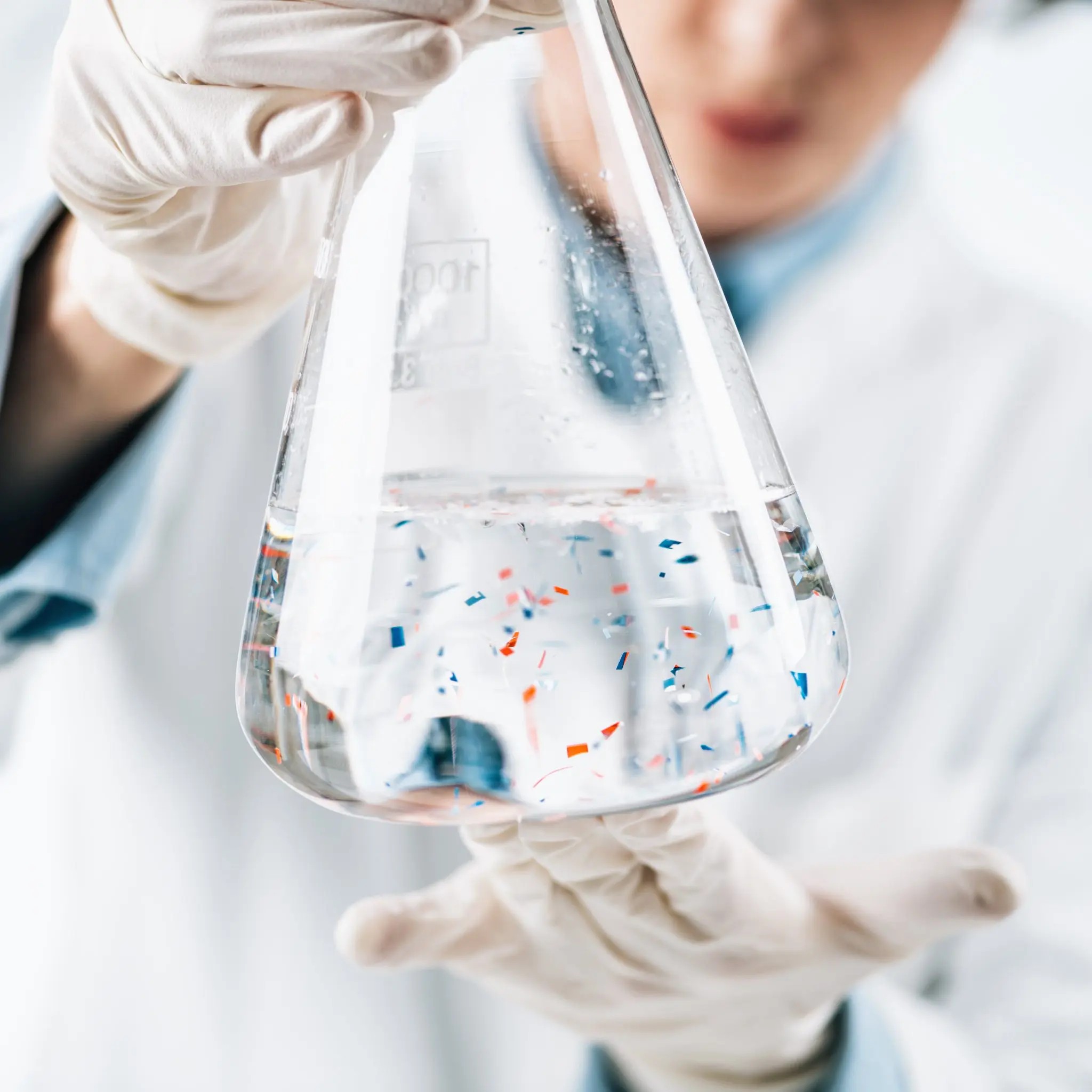
As scientific understanding continues to evolve, businesses increasingly need robust evidence to support environmental claims. Independent testing provides a consistent, science-based way to verify claims against certification criteria while demonstrating transparency to customers, regulators and other stakeholders.
Independent laboratory testing can provide analytical evidence within a defined scope, including the sample type, polymer categories, particle-size range, test method and reporting limit. Results should therefore be interpreted against the criteria of the relevant certification scheme rather than as proof of the absolute absence of every possible microplastic particle.
Where certification is sought, laboratory testing is one part of the process. The test findings are followed by an independent conformity assessment against the scheme’s requirements. Control Union supports businesses seeking certification under the flustix PRODUCT CONTENT MICROPLASTIC-FREE programme.
References
- Legal Limits on Single-Use Plastics and Microplastics: A Global Review of National Laws and Regulations https://apps1.unep.org/resolutions/uploads/legal_limits_single_use_plastics.pdf
- Detection of Various Microplastics in Human Stool: A Prospective Case Series https://pubmed.ncbi.nlm.nih.gov/31476765/
- Lanes Drainage Services UK (2024) What Does the UK Public Know About Microplastics? Complete Survey Results. Available at: https://www.lanesdrainageservices.co.uk/news/uk-attitudes-to-microplastics (Accessed 12 December 2025).
- Home Planet by Grove (2025) Microplastics Are Everywhere — Our New Survey Reveals How Much Americans Know and Don’t Know Available at: https://homeplanet.grove.co/blog-posts/5-gyres-and-grove-2025-microplastics-survey-information (Accessed 12 December 2025)
- Microplastics – ECHA (2026)