
Understanding GMO DNA test results: when is “positive” a problem?
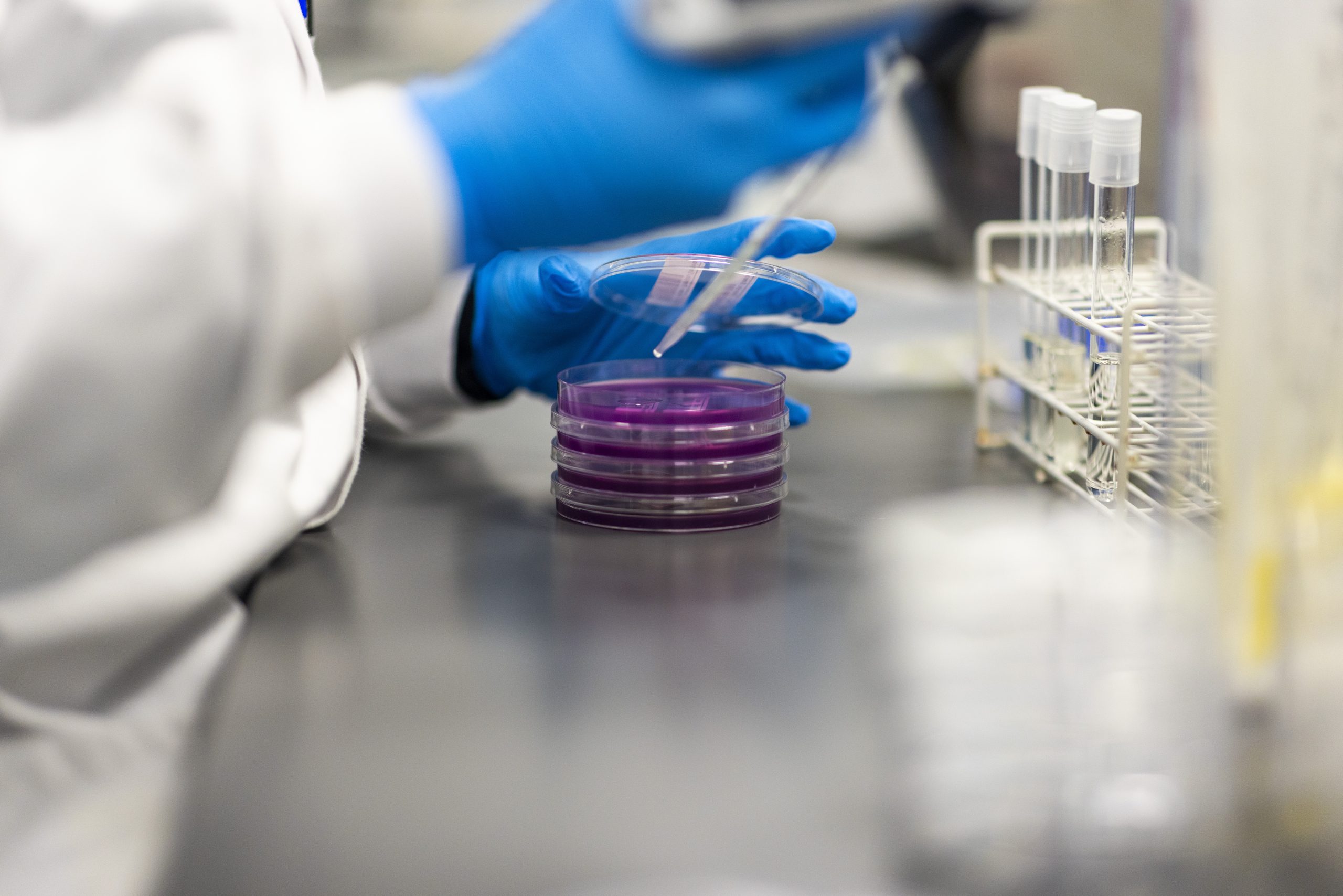
Your product is so close to entering production. The organic cotton you strive to include in this product has just undergone rigorous DNA testing in an independent laboratory, and you are confident that you have taken every precaution to ensure it is free of genetically modified organisms (GMOs).
However, when you receive your test results, the report appears to show a positive GMO result. Suddenly, your GMO-free claims lose their integrity, and it feels like you must return to square one and source a different textile.
But does a “positive” result actually require you to go back to the drawing board?
In this insight, we will discuss the intricacies of reporting in GMO DNA testing cases and why the scientific terminology used may not have the ramifications you expect.
GMO in Organic Cotton
The use of GMOs is prohibited in textiles certified as organic cotton. Under EU law, the presence of GMOs is viewed as being “incompatible with the concept of organic production and consumers’ perception of organic products.” (Council Regulation (EC) No 834/2007, recital 9).
To become certified under the Global Organic Textile Standard (GOTS) and join the thousands of worldwide facilities that are already certified (Global Standard gGmbH, 2026a, p. 5), the organic cotton you wish to introduce into the supply chain cannot contain GMOs (Global Standard gGmbH, 2026b, p. 48).
If GMOs are detected during mandatory testing, the finding can have serious implications for the material’s organic status and it must be investigated in accordance with the applicable certification requirements (Global Standard gGmbH, 2026a, pp. 5-7).
With so much at stake, you would be forgiven for thinking that a “positive” result on your cotton GMO DNA testing immediately bars you from certification or re-certification. However, it is important to consider a nuance in organic cotton production.
The Ramifications of Accidental GMO Contamination
In a 2021 press release, GOTS clarified its position on accidental GMO contamination (Global Standard gGmbH, 2021). While it reiterated that GMOs are excluded from organic systems, it also clarified that organic certification does not guarantee the complete absence of GMO contamination. Rather, the emphasis is on preventing the intentional use of GMOs and taking appropriate precautions to minimise the risk of contamination throughout the supply chain.
Cotton fields do not exist in vacuums. They sit alongside thousands of acres of neighbouring farmland, some of which may use GMOs for pest resistance, crop enhancement, or other purposes. And though the cotton field in question may take every reasonable step to stop these GMOs from impacting its yield, genetic material can be introduced through a range of routes, including seed dispersal, animals, insects, and wind.
GOTS understands this and recognises that there may be occasions where the presence of GMO is “adventitious and technically unavoidable” (Global Standard gGmbH, 2017). And this is where the language used in GMO DNA testing is so important.
Analysing your Cotton DNA Results
Reports must be scientifically accurate and use the required, standardised terminology. As we have already seen from the move from IWA 32:2019 to ISO 5354, the industry has gone to great lengths to ensure that protocols and terminology relating to cotton DNA testing are not open to interpretation depending on which laboratory analyses your textile sample.
Although you may hear a laboratory technician refer to a “positive” GMO result, the terminology used when reporting qualitative screening is more precise. A target sequence is either “detected” or “not detected”. In simple terms, a positive result means that the laboratory has detected the genetic material it was screened for.
However, detection tells you just one thing – something is there. It does not, from that finding alone, tell you why it is there or what the detection ultimately means for the cotton’s organic status.
This distinction becomes particularly important when GMO material is detected at trace levels, i.e. < 0.1%. Modern analytical methods can detect very small amounts of genetic material, so detection should not automatically be interpreted as evidence that GM cotton has been deliberately introduced into an organic supply chain. As we have already discussed, contamination may be adventitious and technically unavoidable.
This is why a positive result can be the beginning of an investigation rather than its conclusion. Evidence such as field and buffer-zone records, seed source documentation, segregation and handling procedures, and neighbouring land use need to be considered to establish the likely source of contamination and determine the appropriate next steps. For example, an investigation may distinguish deliberate GMO use from systemic problems that have allowed contamination to occur, or from unavoidable contamination at the farm level.
Converting Data to Decisions
At Control Union, our laboratory network combines highly trained specialists with advanced analytical equipment and internationally recognised testing protocols to deliver accurate and reliable results.
But receiving accurate data is only part of the process. Our experienced commercial teams understand both the testing process and the challenges facing the textile industry, allowing them to bridge the gap between laboratory analysis and its practical implications. They can talk you through your results in clear, accessible language, answer your questions and help you understand the findings and the considerations that may inform your next steps.
Because when it comes to GMO DNA testing, understanding whether something has been detected is only the first step. Understanding the context around that detection is what turns laboratory data into an informed decision.